MUSEUMERICA 2020
  • Home
    • Reference and Archives
  • Museum Video Visits State by State
    • Museum Video Visits A-F
    • Museum Video Visits G-L
    • Museum Video Visits M-R
    • Museum Video Visits S-W
  • National Aerial Firefighting Museum Concept
  • Links
Picture

National Aerial Firefighting
Museum concept 

A combination of timing, location, and need: A proposed national museum for aerial firefighting history is ripe for development at Boise, Idaho. A team must coalesce if this is to happen. 
  • Museum with strong educational benefit for the community.
  • Operated and funded by a private non-profit organization, not part of the government.
  • Conceived with partnering agreements involving many agencies, companies, and organizations that want to help.
By Frederick A. Johnsen

Air Tanker Museum Concept

     Air tankers – fire bombers – everyone has seen them on the evening
news, roaring over wildfires and discharging brilliant red plumes of liquid
fire retardant to help firefighters build containment lines. A dazzling mix of
heroics and science; energy and engineering, this perennial aerial drama has unfolded for more than a half century. The pilots and aircraft of the pioneer air tanker operators are slipping quietly into the past, like the last wisps of fire retardant lingering in the air at the end of a good drop. Their story deserves and needs to be preserved and made public in a thoughtful, professional museum that honors the people, the aircraft, and the evolving mission.  
    The exciting world of aerial firefighting has deep connections to the Boise, Idaho area. Pioneer air tanker aircraft came from Boise in the 1950s, and the multi-agency National Interagency Fire Center (NIFC) at Boise’s Gowen Field is a national focal point for wildfire management, including the innovative use of aircraft in fighting fires. Boise’s singular connection to aerial firefighters, coupled with a large population base of more than 300,000 residents and thriving tourism along the Interstate 84 corridor, makes this the most appropriate site in the United States for the National Aerial Firefighting Museum (NAFM). 
    The greater Boise area includes more than 75,000 children and youth between the ages of 5 and 18 who will benefit from the educational examples available from the aerial firefighting industry. 
    From the outset, the National Aerial Firefighting Museum must have two parallel purposes: collecting artifacts and stories illuminating the exciting story of aerial firefighting, and using this collection to educate students in
critical-thinking disciplines that teach science, technology, engineering and
mathematics concepts. Whether roaring down a smoky canyon in a World War II-surplus TBM torpedo bomber or making spot-on retardant drops with the aid of computers in a huge 747, the air tanker world can teach us all something about courage backed by science and innovation. 
    The storied bravery of smokejumpers who parachute into remote fire sites adds another dimension to the museum’s presentation. Engineers and forestry scientists continue to invent and validate dazzling improvements in the way we protect lives and manage wildlands.
    Wildfire management is undergoing evolution at a crucial time in America as more and more residents move into the wild. Prudent wildfire management must take into consideration the safety of residents and their property as well as the occasional need to allow some lower-level burning to harvest tinder that otherwise would contribute to out-of-control superfires later. The National Aerial Firefighting Museum is the perfect venue to explore the dynamics and personal responsibilities of wildfire management in the context of the exciting world of flight.
Mission Statement    
    
The mission of the National Aerial Firefighting Museum is to preserve the exciting heritage and technology of aerial firefighting. It can do this best by gathering a world-class collection of aircraft, artifacts, oral histories, images and other devices to share this inspiring story with the public. Integral to the
museum’s goal is providing an engaging venue and the tools for educational opportunities that underscore the history and drama of aerial firefighting.
    To do this, the museum will illustrate the science, technology, engineering, and mathematics concepts necessary to the mission. And it will foster the over-arching goal for students to become critical thinkers and self-motivators throughout their lives.
Museumerica.com is pleased to share this idea with our website visitors. The goal is to create the best National Aerial Firefighting Museum possible, using the creative talents of as many people as possible. This is not an official Museumerica.com proposal; the creation of the NAFM could happen with or without Museumerica.com participation. Museumerica.com cannot personally reply to all messages, but we will endeavor to follow up on queries that could help coalesce a team to make the National Aerial Firefighting Museum a reality. Now, the NAFM is no more than the electrons on this web page. Could you get it out of the virtual world and onto the map?

    Contact for NAFM queries

Submit
Picture
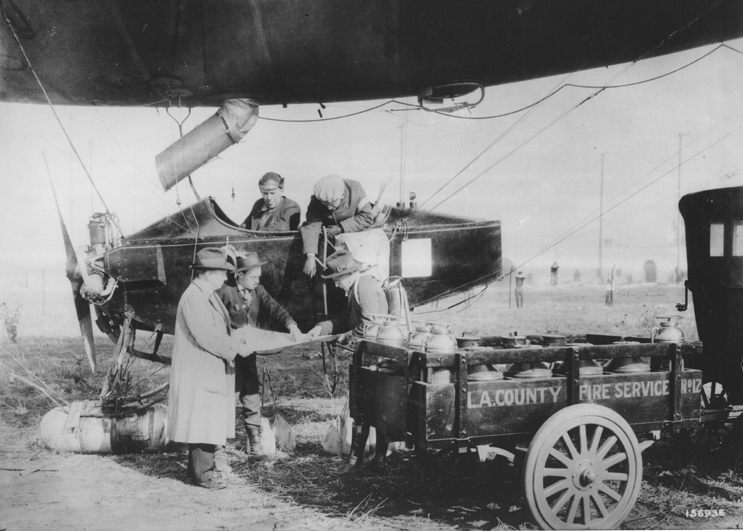
Around 1921, Los Angeles County considered the use of dirigibles in fighting fires. Load for the airship appears to be fire extinguishers and milk cans. (USFS)
Picture
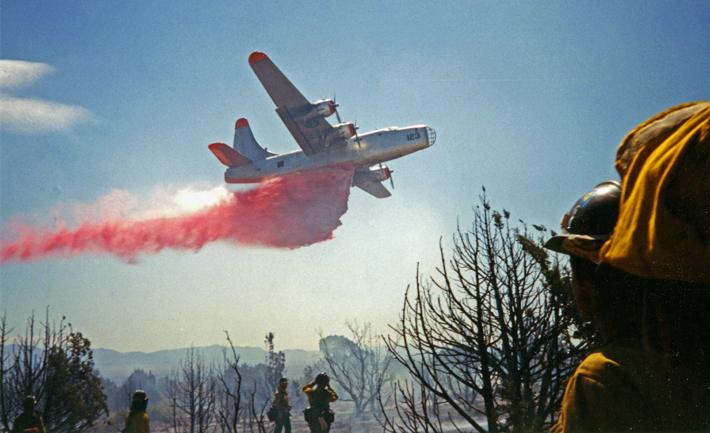
Firefighters watched the release of dyed retardant from a World War II PB4Y-2 Privateer on the Jackrabbit Fire in Nevada on July 10, 1994. (Keith Conrad photo)
Picture
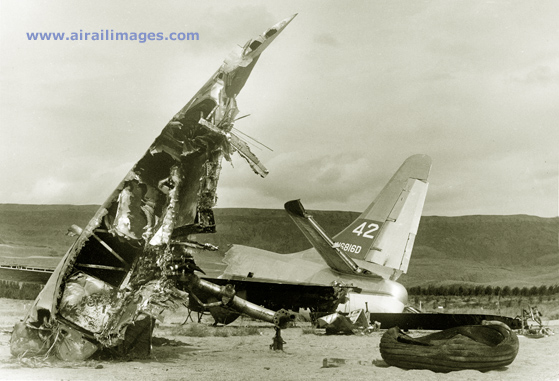
Photos of vintage firefighting aircraft like this burned-out PB4Y-2 Privateer (Wenatchee, Wash., 1972) are grim reminders that time has removed many vintage fire bombers. (F. Johnsen photo)
Picture
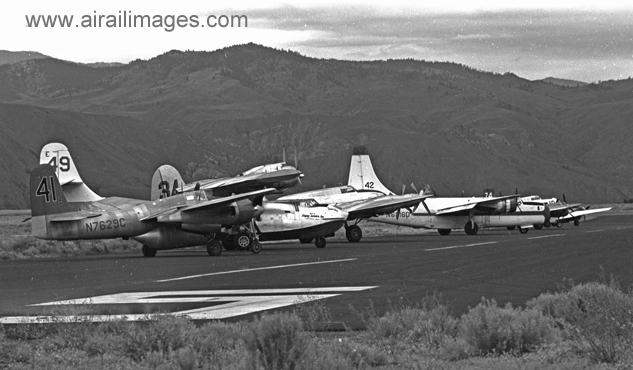
Fantastic lineup of World War II surplus bombers converted into air tankers convened at Wenatchee, Wash., in July 1970 to fight wildfires in north central Washington. All of the aircraft in this photo have since been retired; some crashed. (F. Johnsen photo)

The Golden Age of World War II surplus air tankers caught on film

This motion picture and still photo collection preserves a remarkable group of firefighting air tankers that gathered at Wenatchee, Wash., to fight severe wildfires in north central Washington in July 1970.
Picture
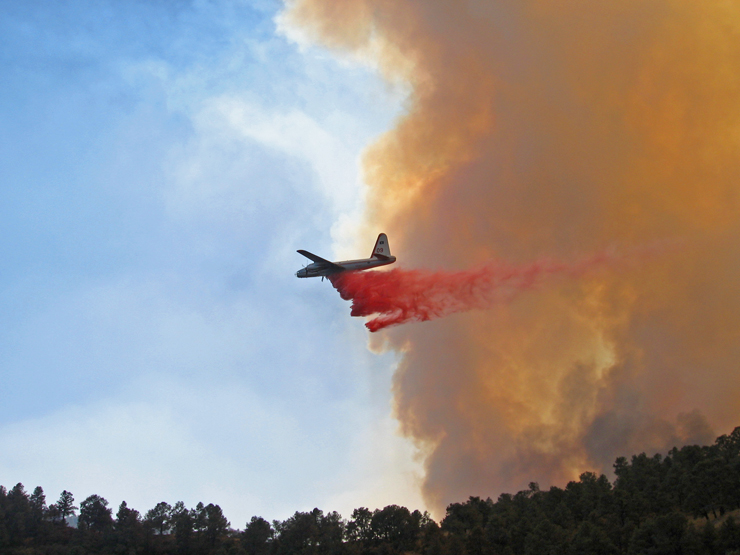
Wall of smoke contrasts with blue sky behind a Lockheed P-2 Neptune air tanker relesign retardant on California's Zaca Fire in 2007. (Darrell Brooks photo)
Picture
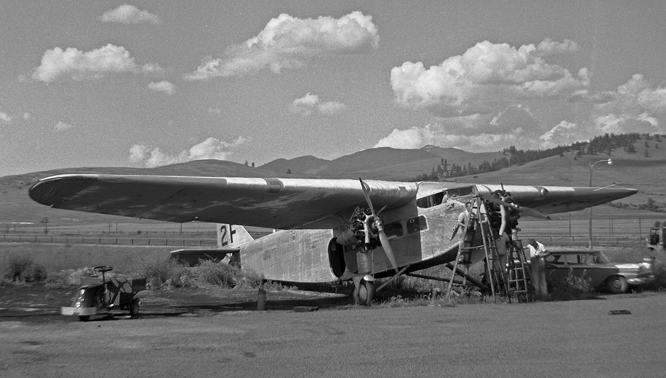
Classic Ford Trimotor photographed in July 1965 at Missoula, Mont., saw service as smokejumper aircraft as well as fire bomber. (F. Johnsen photo)
Picture
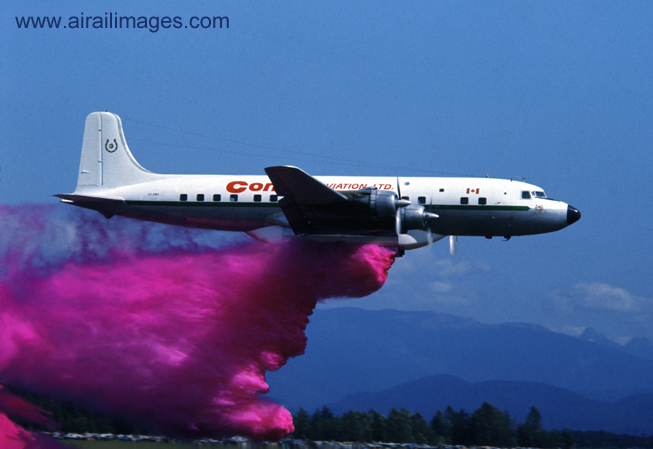
Canadian air tanker operator Conair flew this Douglas DC-6 in the 1970s. (F. Johnsen photo)
Picture
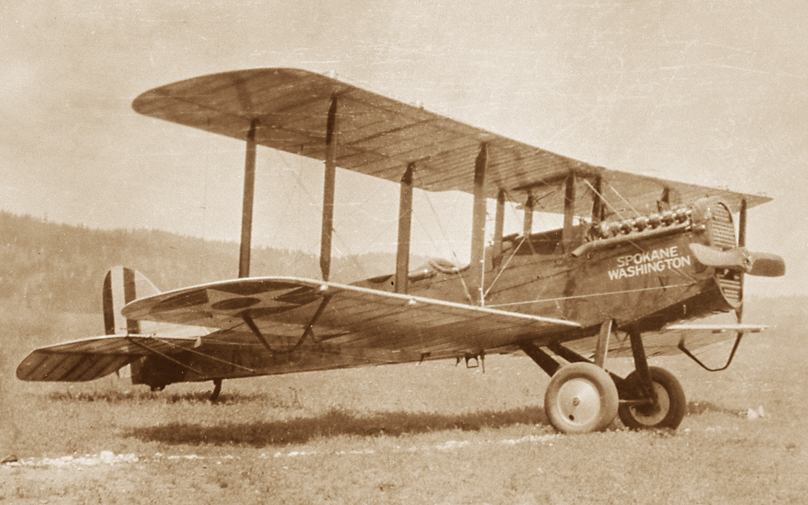
After World War I, Army Air Service DH-4 biplanes flew fire spotter patrols over the western United States in the 1920s, long before the practical use of aircraft as fire bombers. (John E. Dean collection)
Picture
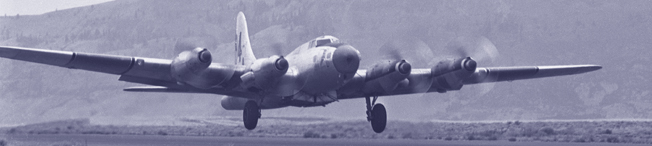
One-of-a-kind turboprop conversion B-17F Flying Fortress air tanker lifted off from the runway at Wenatchee, Wash., in July 1970. A month later, this bomber was lost with its crew fighting wildfire. (F. Johnsen photo)
Articles and materials presented on this website are intended for entertainment and to promote further research by interested visitors. Get professional
opinions from museum specialists in your area before undertaking any museum projects.
Proudly powered by Weebly